Northern Michigan University is one of a select group of only 30 undergraduate institutions nationwide that The Princeton Review has named to its Mental Health Services Honor Roll for 2026. On a related note, NMU is also featured in The Princeton Review's “Guide to Green Colleges: 2026 edition,” for practicing and promoting environmental responsibility (read a separate story on the latter here).
The education services company's Mental Honor Roll identifies institutions that demonstrate a strong commitment to their students' mental health and well-being. It selected the schools for the list based on data from its 2025 Campus Mental Health Survey, which polled 540 colleges. Administrators were asked 57 questions about their school's counseling, mental health and wellness services for students.
As part of this project, which The Princeton Review conducts in partnership with the Ruderman Family Foundation, an internationally recognized organization that works to end the stigma associated with mental health, the company also surveyed students at 300 colleges about their awareness of their school's mental health services.
The criteria for the 2026 Honor Roll selections broadly covered three areas: whether students have a campus quality of life that is both healthy and attentive to the students' overall well-being; how well a school is empowering its students to address their own mental health through education programs and peer-to-peer offerings; and the overall administrative support for campus mental health and well-being through its policies including commitments to staffing and student support.
"With college students experiencing high levels of stress, anxiety, depression and other challenging issues, the availability of campus mental health services has become vitally important," said Rob Franek, The Princeton Review's editor-in-chief. "We are honored to commend Northern Michigan University for prioritizing the mental health of its students and all the ways it is demonstrating commitment to promoting their student's overall well-being."
According to NMU's profile on the Mental Health Honor Roll website, the university has seen a positive response from the implementation of Outcomes Focused Sessions, one-day appointments with a licensed counselor that take direct action on mental health concerns.
“Between that and other free, proactive approaches, NMU is a place where students in need ‘don't get in trouble, they get help,' whether that's at the counseling center, the health center, or through various programming,” the description states.
Northern reported that students have multiple avenues when it comes to “individualized support for becoming their whole, authentic selves":
- Counseling and Consultation Services (CCS) provides traditional telehealth or in-person psychotherapy appointments, and makes every attempt to accommodate the specific needs of each student. Group counseling of up to eight students is also sometimes recommended, and after-hours counseling is provided by HelpNow.
- CARE (Case Administration and Resource Education) provides non-clinical support for dealing with stressful situations and finding community support.
- The Wildcat Support Network, which provides contacts for each of the eight dimensions of support: intellectual, career, physical, social, spiritual, emotional, environmental, and financial.
The school also provides a wide range of general resources, compiling and sharing information from national organizations, from NAMI (National Alliance for the Mentally Ill) to the National Women's Health Information Center, always with the goal of destigmatizing the idea of asking for help.
Classrooms and residential halls are visited by counselors to ensure that students have an awareness of various mental health topics and know where to turn for help. Students are also encouraged to take charge of their own progress by using apps like WellTrack Boost to track their personal mood and work through modules, videos and self-help tools as needed.
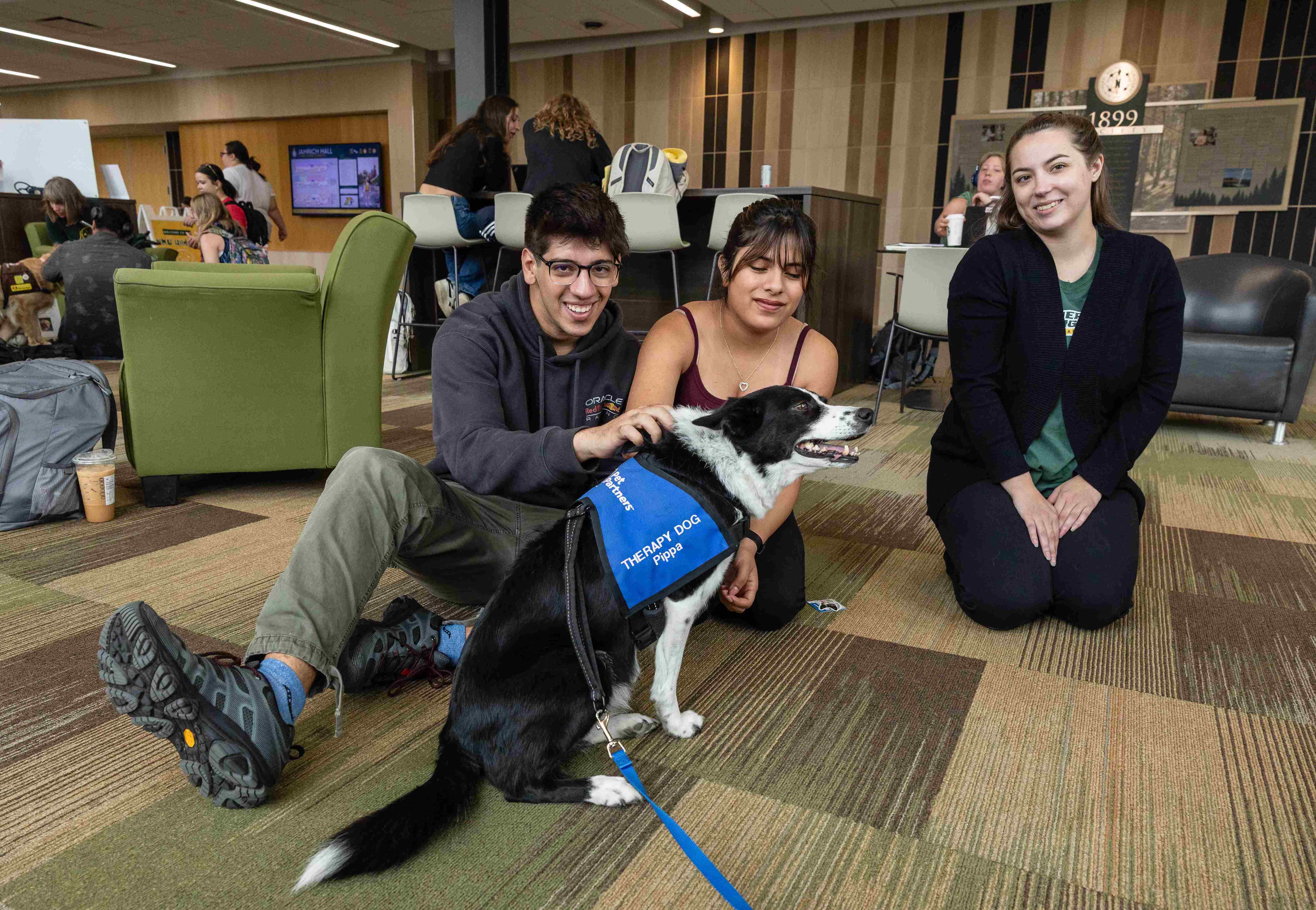
The NMU profile states that one particularly innovative form of stress relief comes through the Animal Assisted Intervention program. The Wildpups (and a new Wildcat member) are registered therapy animals that students can interact with if they're missing their home and need to “ease the anxieties that come with being a college student.”
Other offerings found across campus that can reduce stress include:
- PathwayU (career guidance and wellbeing)
- A pantry that works to address food insecurity
- The Office of Opportunity, Empowerment and People, which seeks to ensure that “all individuals—regardless of background or circumstance—have the pathways, resources and support needed to succeed.”
NMU peer-to-peer resources include The Hub, an electronic service that helps students at NMU discover and match with student organizations, events and activities. The idea is that they are more likely to connect with people when they're doing something they love. An in-person equivalent of this would be through resident advisers and directors in each housing community.
The Princeton Review Mental Health Services Honor Roll list for 2026 is posted in alphabetical order. The education services company known for its tutoring, test-prep, admission services, books and other learning resources is headquartered in New York, NY. It is not affiliated with Princeton University.